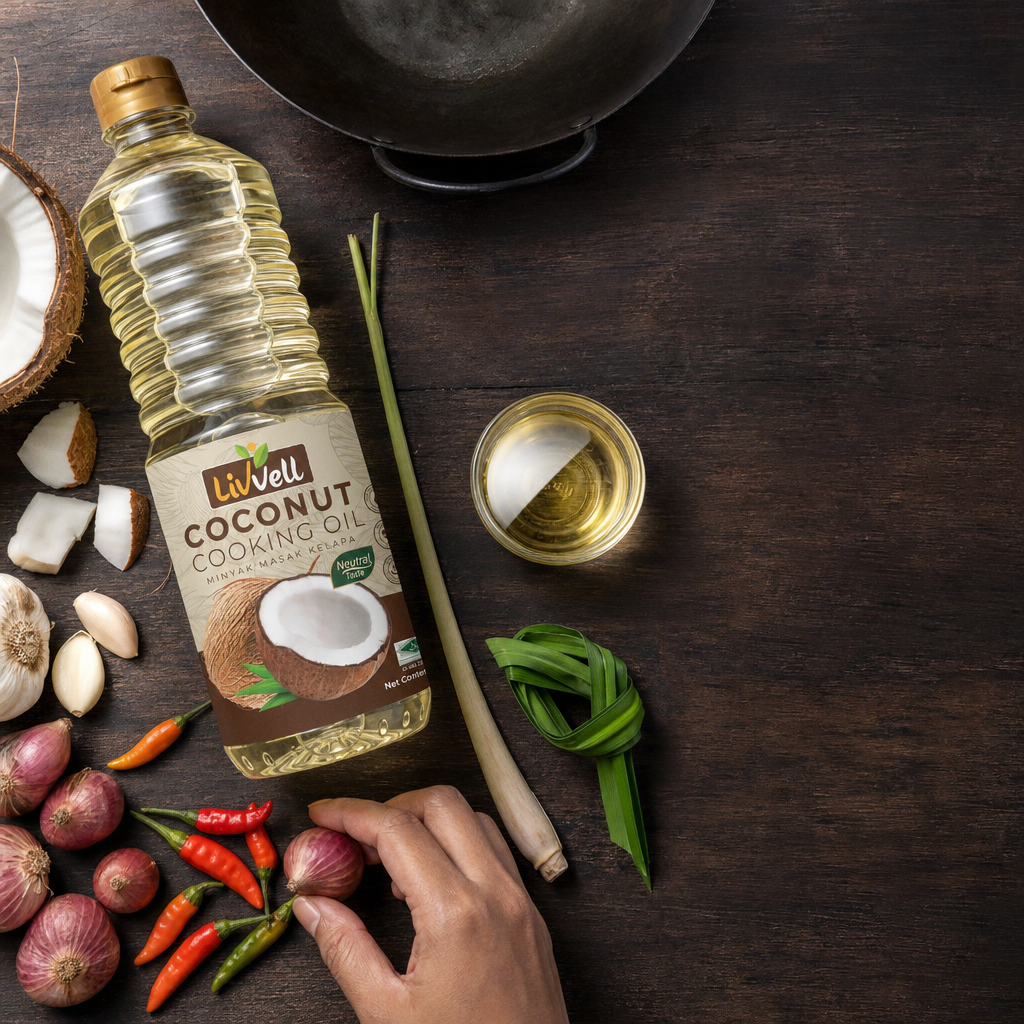
Coconut Oil vs Olive Oil: Which Is Better for Malaysian Cooking?
You have two premium bottles on the counter. One is coconut oil, the other is extra virgin olive oil, and tonight’s dinner is ayam masak



You reach for the bottle to fry some ikan kembung and stop. One shelf at the supermarket had virgin coconut oil in a small glass jar. The other had a bigger bottle simply labelled coconut cooking oil. Same coconut, very different prices. So which one belongs next to your stove?
Coconut oil in Malaysia comes in two main types: virgin (unrefined) and refined. They start from the same fruit, but how they are processed changes their smell, their taste and how much heat they can take. Refined coconut oil starts smoking at about 204–232°C, against about 177°C for virgin, and both are high in saturated fat. This guide explains what that means in plain terms, tells you which local dishes suit each one, and is honest about where coconut oil fits in a balanced diet.
The timing matters too. According to the Malaysian Palm Oil Board (MPOB) Palm News, coconut oil became a premium global commodity in 2026 as Asian supply tightened, with farmers harvesting younger nuts for coconut water instead of oil. Knowing which type you actually need helps you avoid paying for qualities your cooking will not use.
Virgin coconut oil is pressed from coconut and left unprocessed, so it keeps a strong coconut smell and taste. Refined coconut oil is cleaned after pressing, which removes the aroma and colour and lets it handle higher heat.
According to Healthline, most virgin coconut oil is made by pressing milk and oil from fresh coconut and separating them, while refined oil is pressed from copra (dried coconut kernel) and then purified. Virgin oils labelled cold-pressed are extracted without heat. That purification is often shortened to RBD, which stands for refined, bleached and deodorised. “Bleached” here means filtering through activated clay, not chemical bleach.
Nutritionally, the two are close to identical. Healthline notes that both provide around 120 calories of fat per tablespoon, with similar proportions of medium-chain triglycerides (MCTs) and saturated fat. The main fatty acid in both is lauric acid, a medium-chain fatty acid that, according to Healthline, makes up about 40% of coconut oil’s total fat. The real differences are in the kitchen.
| Virgin coconut oil | Refined (RBD) coconut oil | |
|---|---|---|
| Made from | Usually fresh coconut | Copra (dried coconut kernel) |
| Aroma and taste | Strong coconut | Neutral, almost none |
| Smoke point | About 177°C | About 204–232°C |
| Best for | Kuih, desserts, raw use, coconut-forward dishes | Frying, sautéing, baking, everyday cooking |
| Typical price | Higher | Lower |
Refined coconut oil has a smoke point of about 204–232°C, while virgin coconut oil starts smoking at about 177°C, according to Healthline.
Smoke point is the temperature at which an oil starts to break down and give off smoke. Once oil passes that point, it can taste bitter and fill your kitchen with fumes. For most Malaysian home cooking, that number matters more than any label claim. Our guide to rice bran oil vs other cooking oils explains how smoke point shapes the way each oil behaves in the wok.
Most home frying, from stir-frying to sambal tumis, stays below 200°C but often climbs past 177°C on a hot wok. Virgin coconut oil reaches its limit there. Refined coconut oil has more headroom, which is why it is the version sold as a cooking oil. If you fry at high heat often, you can also compare it with the other high-heat oils in our avocado oil vs olive oil vs rice bran oil guide, or go deeper on two of them in avocado oil vs olive oil.
No. Virgin and refined coconut oil have nearly identical nutrition, so virgin is not the healthier choice. It is the more fragrant one.
The word “virgin” carries a premium feel, largely because of extra virgin olive oil. With coconut oil, the label tells you about flavour more than health. According to Healthline, both types share similar ratios of MCTs, lauric acid and saturated fat, and both provide about 120 calories per tablespoon.
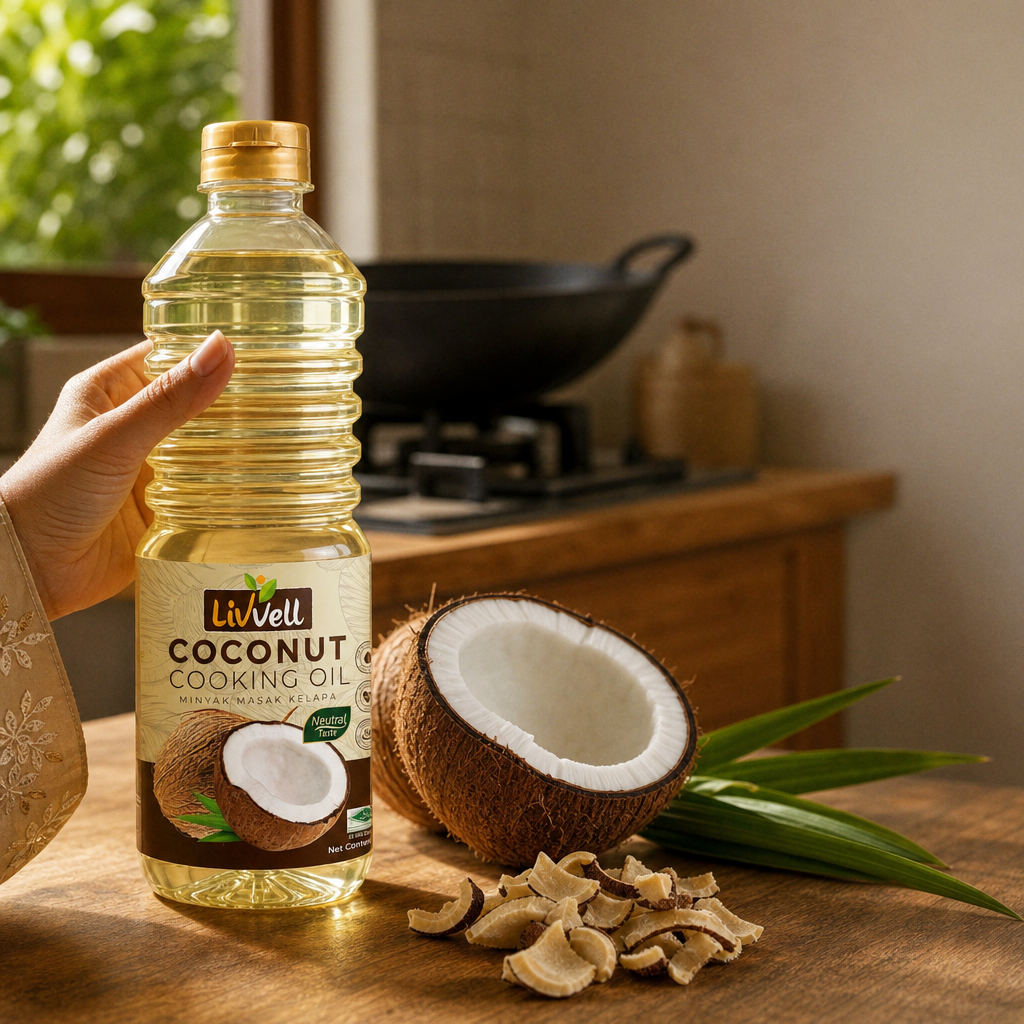
What virgin does better is keep the coconut aroma and taste intact. Refined oil wins on heat tolerance and a neutral finish, and the refining step that removes free fatty acids also lowers the risk of the oil going rancid. Think of virgin as a flavour oil and refined as a cooking oil.
If “refined” makes you think of chemicals, check how the oil was made. Some refined oils are extracted with solvents such as hexane. A refined coconut oil that states it uses no solvents gives you the cooking benefits without that concern.
For everyday frying and sautéing, refined coconut oil is the better choice because it tastes neutral and tolerates higher heat. Save virgin coconut oil for dishes where you want the coconut flavour to come through.
Here is how that plays out in a Malaysian kitchen:
One practical note: coconut oil starts to set in cooler rooms, typically somewhere around 24°C. In a Malaysian kitchen it stays liquid most of the year, but a bottle kept in an air-conditioned room may turn cloudy or firm. That is normal and does not mean the oil has spoiled. Warm the bottle in your hand or near the stove and it will clear again.
Coconut oil is high in saturated fat, so it is best used in moderation as part of a varied diet rather than as your only cooking oil.
This is the honest part of the story. According to a 2017 presidential advisory from the American Heart Association, coconut oil is about 82% saturated fat, more than butter. The AHA recommends limiting saturated fat and replacing some of it with unsaturated fats. Closer to home, Key Message 8 of the Ministry of Health Malaysia’s Malaysian Dietary Guidelines advises limiting high-fat foods and using less oil when you cook, whichever oil you choose.
That does not make coconut oil off-limits. It does contain MCTs, and like every plant oil it contains no cholesterol. It has almost no trans fat: Livvell’s label lists 0.3g per 100ml. Many Malaysian households have cooked with it for generations. The sensible approach is rotation: use coconut oil where its stability and taste suit the dish, and use oils higher in unsaturated fat, such as King Rice Bran Oil or Colavita Avocado Oil, for the rest of your week. Browse the full King and Colavita ranges, or read up on the benefits of rice bran oil and the benefits of olive oil before you decide.
Coconut oil contains more saturated fat than palm oil, the default cooking oil in most Malaysian homes. According to MPOB’s Palm Oil Health Facts, palm oil is about 49% saturated, 40% monounsaturated and 10% polyunsaturated fat. Coconut oil, at 82% saturated fat according to the AHA, sits well above it. The two also behave differently in the bottle: palm olein stays liquid in a cool room, while coconut oil can firm up.
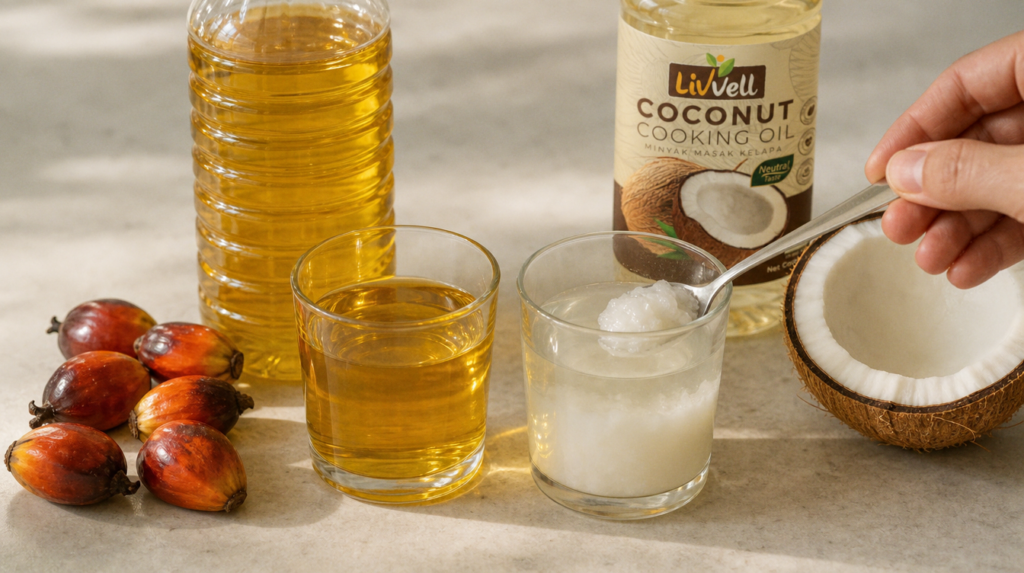
Where coconut oil wins is flavour control and stability. Refined coconut oil tastes neutral, stays stable at frying temperatures and gives fried food a light, clean finish. If you are weighing up a switch from palm oil, think of coconut oil as one option in a rotation rather than a straight replacement for every dish. If you want a second premium oil in that rotation, our guide to avocado oil in Malaysia is a good next read.
Check the label for the type (virgin or refined), how it was refined, the Halal certification and the pack size that matches how often you cook.
Livvell Coconut Cooking Oil is a 100% refined coconut oil made from copra and refined without hexane or chemical solvents, designed for everyday frying, sautéing and baking.
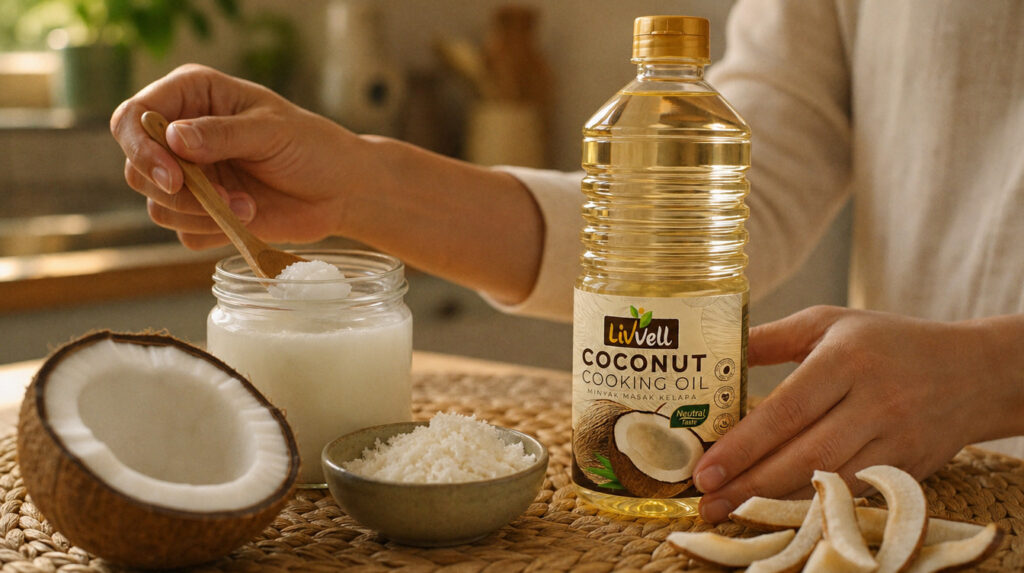
It goes through the RBD process to remove impurities, colour and smell, so it cooks with a clean, neutral taste. Livvell states a smoke point of about 232°C, the top of the range for refined coconut oil, and recommends it for frying, stir-frying, baking and marinating. It is heat-stable at medium-high cooking temperatures, which makes it a practical choice for high-heat cooking at home, and comes in a 1L bottle with a two-year shelf life from manufacture. It is made in Thailand and is Halal certified.
Livvell highlights that the oil is rich in medium-chain triglycerides (MCTs), which the body uses as a quicker source of energy than long-chain fats and which may support metabolism. It is cholesterol-free and contains 0g trans fat per serving.
Livvell is the same Malaysian-owned brand behind the shiitake mushroom crisps many snackers already know. You can see the full range on the Livvell brand page.
If you are looking for a neutral, solvent-free coconut oil for daily cooking, explore Livvell Coconut Cooking Oil at sanglafoods.com. You can also find it on Shopee and Lazada, or browse the rest of our cooking oils at sanglafoods.com/shop. Need ideas for what to cook first? Our recipes page has dishes that put a good cooking oil to work.
Refined coconut oil is best for everyday cooking in Malaysia. It has a neutral taste and a smoke point of about 204–232°C, so it handles frying and sautéing better than virgin coconut oil. Choose virgin coconut oil when you want the coconut flavour in the dish.
No, refined coconut oil is not bad for you when used in moderation. It has almost the same nutritional profile as virgin coconut oil. Both are high in saturated fat, so health bodies such as the American Heart Association recommend balancing them with oils higher in unsaturated fat.
Yes, you can deep fry with refined coconut oil. Its smoke point of about 204–232°C sits above the temperatures most home cooks use for deep frying. Virgin coconut oil is less suited to deep frying because it starts smoking at about 177°C.
Coconut oil turns solid when the room gets cool, typically somewhere around 24°C. This is normal and happens in air-conditioned rooms or fridges. Gently warming the bottle will turn it back to a clear liquid without affecting quality.
Coconut oil is plant-based, but you should still look for a Halal logo from JAKIM or a foreign body JAKIM recognises, since certification covers processing as well as ingredients. Livvell Coconut Cooking Oil is Halal certified.