Halal Healthy Snacks in Malaysia
Halal Healthy Snacks in Malaysia You are standing in the snack aisle, reading the back of a pack, hunting for the halal logo before you



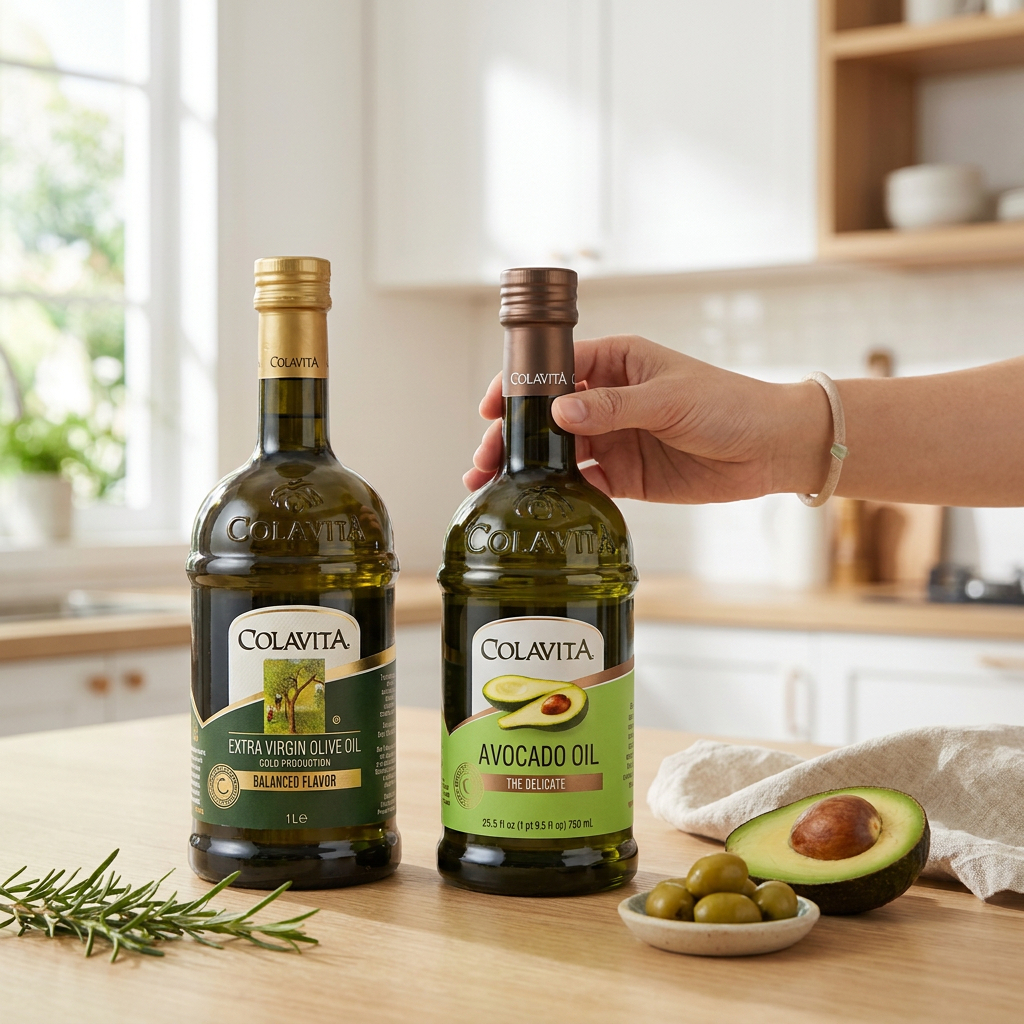
You are standing in the oil aisle at Jaya Grocer, and there are two premium bottles in front of you: avocado oil and olive oil. Both cost more than the palm oil you grew up with, both promise heart benefits, and both claim to be the healthier choice.
So which one actually belongs in your kitchen?
The short answer is that most Malaysian home cooks benefit from owning both. Avocado oil in Malaysia is the better pick for high-heat wok work and deep frying, while extra virgin olive oil is the one you want for flavour, dressings and everyday Mediterranean cooking.
This guide breaks down the real differences in smoke point, flavour, nutrition and price, so you can spend on the oil that fits how you actually cook.
We import and distribute Colavita, one of Malaysia’s best-selling olive oil brands, which also produces a cold-pressed avocado oil. That gives us a clear view of where each oil earns its place on your shelf, and where it does not.
Avocado oil is pressed from the flesh of the ripe avocado fruit, while olive oil is pressed from whole olives. Both are fruit oils, both are built mainly on heart-friendly monounsaturated fat, and both are extracted using similar mechanical methods.
The practical difference is character. Olive oil, especially extra virgin, carries a distinct green, peppery, slightly bitter flavour that changes the taste of a dish.
Avocado oil is close to neutral, with a mild buttery note that stays in the background. That single difference drives almost every decision about which one to reach for.
Both oils also come in refined and unrefined grades. Extra virgin means the oil is mechanically extracted without heat or chemical refining, keeping its natural antioxidants and flavour compounds.
Refined versions of either oil are stripped of colour and aroma, which raises the smoke point but removes much of the nutritional value.
| Feature | Extra Virgin Olive Oil | Avocado Oil |
|---|---|---|
| Source | Whole pressed olives | Flesh of the avocado fruit |
| Flavour | Green, peppery, slightly bitter | Mild, buttery, near neutral |
| Smoke point | Around 175 to 210°C | Around 250°C |
| Main fat | Monounsaturated (oleic acid) | Monounsaturated (oleic acid) |
| Best for | Dressings, drizzling, low to medium-heat cooking, roasting | High-heat frying, searing, stir-frying, grilling |
| Typical Malaysian price | Colavita EVOO from RM25 (250ml) | Colavita Avocado Oil RM63.75 (750ml) |
Avocado oil has the higher smoke point, sitting around 250°C for unrefined oil, compared with roughly 175 to 210°C for extra virgin olive oil. That makes avocado oil the more forgiving choice for the high temperatures common in Malaysian cooking.
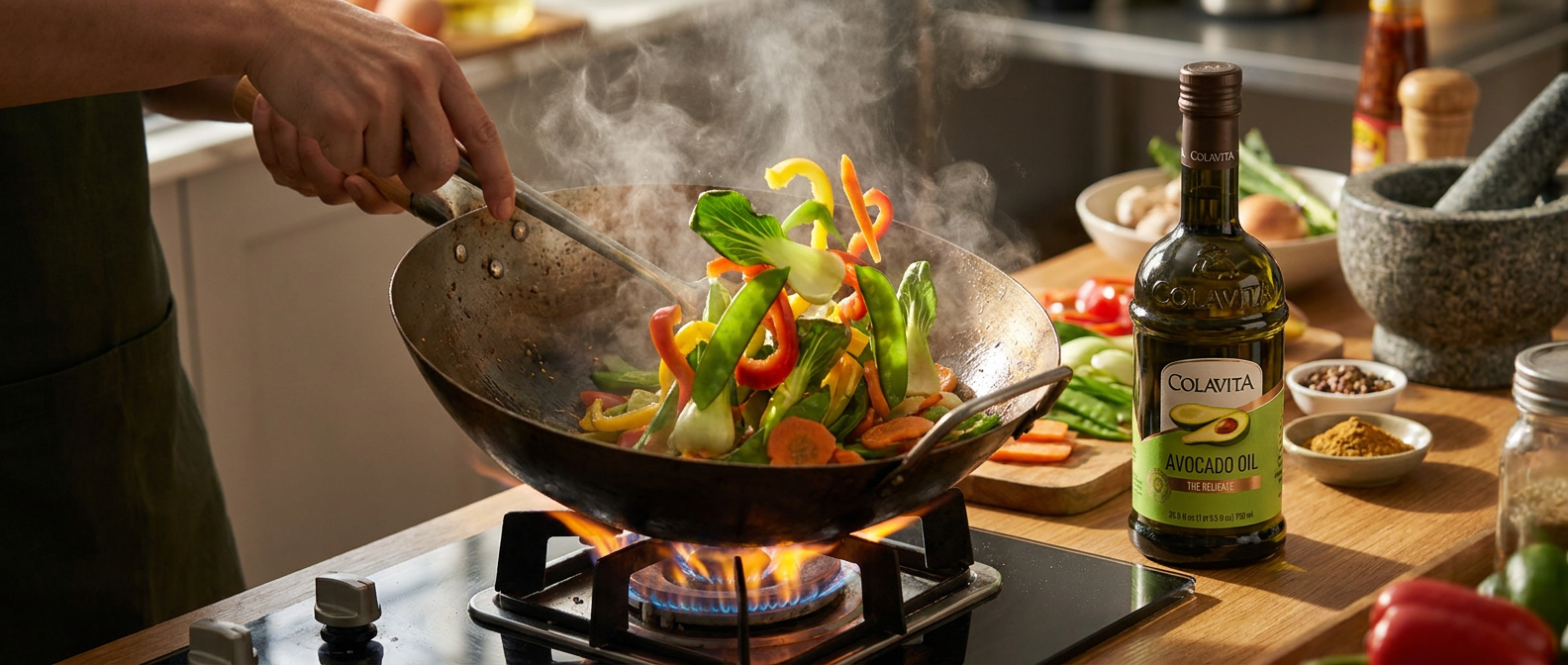
Smoke point is the temperature at which an oil starts to visibly smoke and break down. When you are stir-frying in a screaming-hot wok or deep-frying, an oil that holds its structure at high heat is easier to work with and less likely to leave a burnt taste.
According to the North American Olive Oil Association, extra virgin olive oil smokes between roughly 175 and 210°C depending on quality, which still covers most sauteing and roasting, but leaves less headroom than avocado oil.
Here is the honest caveat most oil marketing skips: smoke point is not the whole story. Research summarised by the North American Olive Oil Association shows that oxidative stability, not smoke point alone, determines how safely an oil performs under heat.
High-quality extra virgin olive oil is rich in antioxidants and stays remarkably stable, releasing fewer harmful compounds than many refined oils even when pushed past its smoke point.
For most home cooking, both oils are safe within normal temperature ranges. The typical frying temperature in a home kitchen is around 180°C, which sits comfortably inside olive oil’s range and well within avocado oil’s.
Both avocado oil and olive oil are among the healthiest cooking fats available, and their nutritional profiles are strikingly similar. Both are built primarily on oleic acid, a monounsaturated fatty acid associated with supporting heart health.
According to a review published in the American Journal of Clinical Nutrition, diets rich in monounsaturated fats such as those in olive and avocado oil are associated with improved cardiovascular markers when they replace saturated fats.
Note the framing: these fats are linked to better outcomes, not a cure. No single bottle of oil prevents or treats heart disease on its own.
Where the two differ slightly is in what survives extraction. Extra virgin olive oil retains natural polyphenols and Vitamin E, compounds that contribute both flavour and antioxidant activity.
Olive oil is also the most studied culinary oil in the world, as the central fat of the widely researched Mediterranean diet. Avocado oil delivers a comparable monounsaturated fat profile, though much of the retail supply globally is refined, which reduces its antioxidant content.
The trustworthy takeaway is that neither oil is a miracle. Choosing either one over saturated or heavily refined oils is the meaningful upgrade, and the choice between them comes down to cooking method and taste, not a large health gap.
Reach for extra virgin olive oil whenever flavour is part of the dish. Its green, peppery character is a feature, not a background note.
Use it for salad dressings and vinaigrettes, for drizzling over grilled fish or roasted vegetables, and as a dip for warm bread. It also performs well for medium-heat sauteing, gentle pan-frying and oven roasting at standard temperatures.
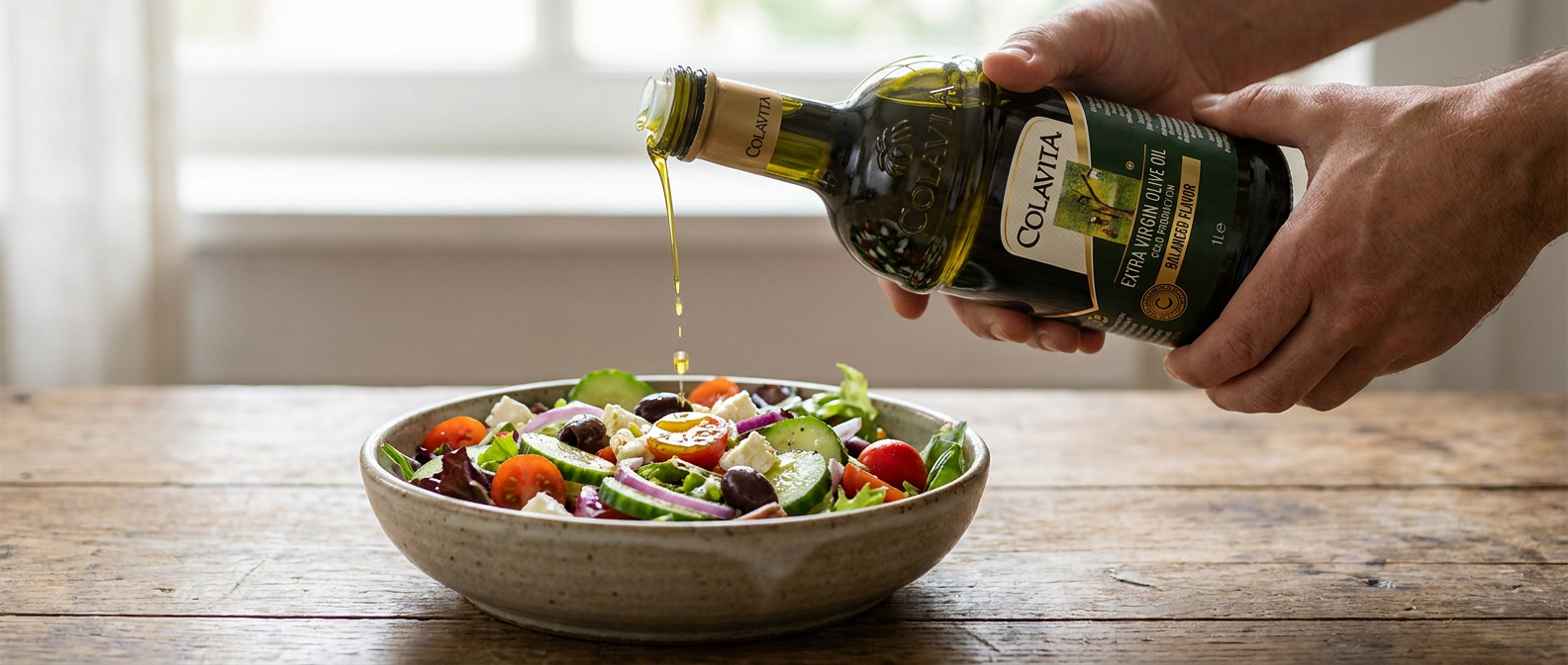
A quality extra virgin olive oil like Colavita, cold-pressed in Italy, brings a depth that a neutral oil simply cannot replicate in Italian and Mediterranean cooking.
For a Malaysian kitchen, that means olive oil is the natural pick for pasta, for a simple aglio e olio, for salad-heavy meals, and for any dish where you want the oil itself to taste of something.
Reach for avocado oil when heat and neutrality matter more than flavour. Its high smoke point and mild taste make it the more practical everyday frying oil.
Use it for high-heat stir-frying in a wok, for searing meat, for deep-frying, and for grilling. Because it is close to flavour-neutral, it will not fight with the aromatics, spices and sauces central to Malaysian cooking.
Colavita Avocado Oil is centrifuge-extracted from avocado flesh, giving a clean oil that holds up to the temperatures a Malaysian stovetop routinely hits.
It is also a sensible choice if someone in your household finds the assertive taste of extra virgin olive oil too strong. Avocado oil lets you get the monounsaturated fat benefits without changing the flavour of a familiar dish.
Both oils are premium products, and there are times when a different oil makes more sense.
If you are deep-frying in large volumes on a tight budget, a dedicated high smoke point oil such as rice bran oil is more economical and still heat-stable. Our own King Rice Bran Oil, naturally containing oryzanol, is built for exactly that high-heat, high-volume role.
If you specifically want the whole-fruit benefits of avocado, such as fibre and potassium, the oil will not deliver those. Those nutrients live in the flesh, not the extracted oil.
And if a recipe depends on a completely flavourless base, refined oils will be more neutral than either premium oil here. Being clear about these limits is part of choosing well.
The simplest approach for most Malaysian kitchens is to keep both: an extra virgin olive oil for flavour and finishing, and an avocado oil for high-heat cooking.
You can explore the full Colavita range, including extra virgin olive oil from RM25 and Colavita Avocado Oil at RM63.75, at sanglafoods.com, Shopee and Lazada.
Avocado oil is better for high-heat Malaysian cooking such as wok stir-frying and deep-frying, thanks to its higher smoke point of around 250°C and neutral flavour. Olive oil is better for dressings, drizzling and medium-heat cooking where its flavour adds value. Most cooks benefit from keeping both.
You can swap them in many recipes, but the results differ. Olive oil adds a green, peppery flavour, while avocado oil stays neutral, so a substitution changes the taste of the dish. For high-heat frying, avocado oil is the safer swap because of its higher smoke point.
Both are among the healthiest cooking oils and share a similar monounsaturated fat profile associated with supporting heart health. Extra virgin olive oil retains more natural antioxidants and is the most studied culinary oil. The health difference between them is small, so choose based on cooking method and taste.
Extra virgin olive oil has a smoke point of roughly 175 to 210°C, depending on quality and freshness. This covers most home sauteing and roasting, which typically happens around 180°C. Higher-quality extra virgin oils with low free fatty acid content tend to sit at the upper end of that range.
Yes. Colavita Avocado Oil (750ml) is available in Malaysia through Sangla Foods at sanglafoods.com, as well as on Shopee and Lazada. Colavita also offers a full range of extra virgin and pure olive oils in 250ml to 1L sizes.