Coconut Oil vs Olive Oil: Which Is Better for Malaysian Cooking?
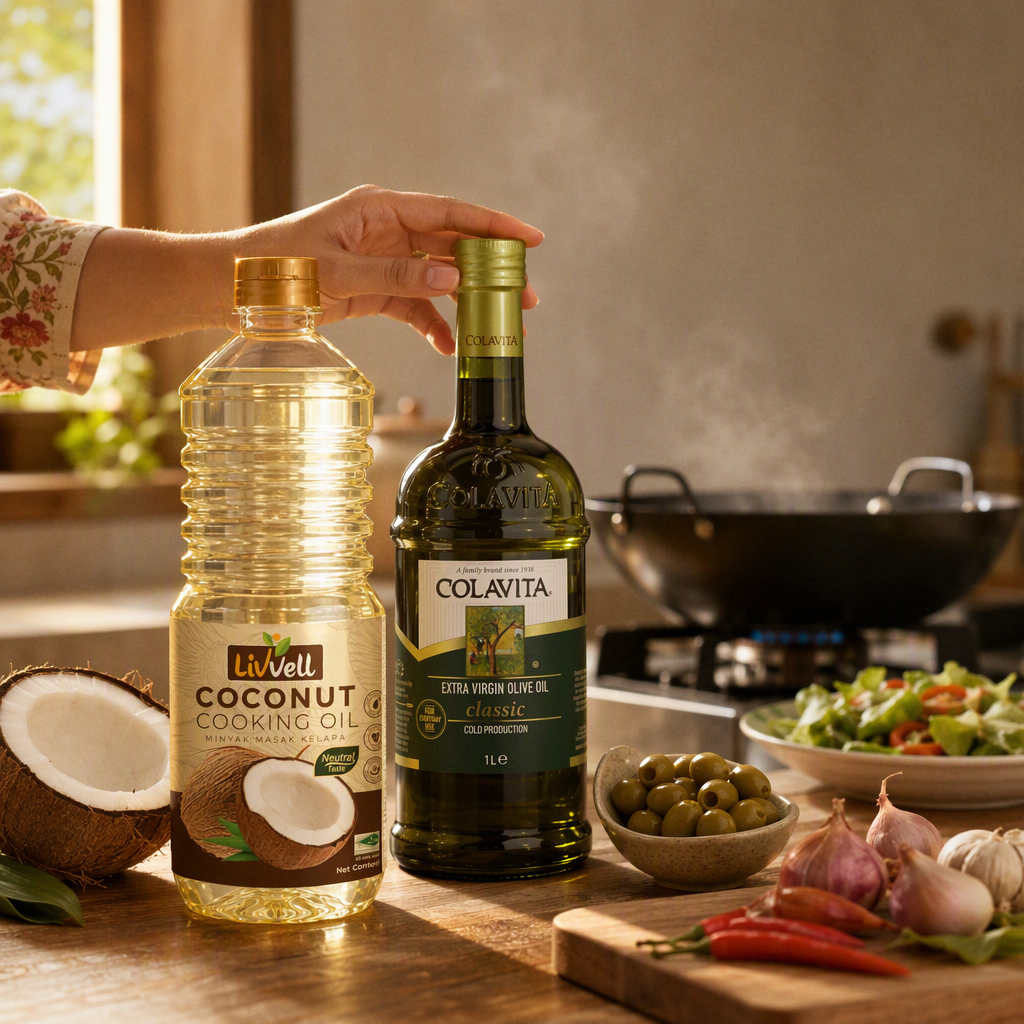
You have two premium bottles on the counter. One is coconut oil, the other is extra virgin olive oil, and tonight’s dinner is ayam masak



You have two premium bottles on the counter. One is coconut oil, the other is extra virgin olive oil, and tonight’s dinner is ayam masak kicap with a side salad. Which one goes in the wok, and which one goes on the greens?
The short answer to coconut oil vs olive oil: extra virgin olive oil is the healthier everyday oil, while refined coconut oil is the better choice when you need a neutral taste for hot frying. Olive oil is about 75% monounsaturated fat. Coconut oil is about 82% saturated fat. That one difference shapes almost everything else in this comparison.
This guide compares the two on fat profile, heat, flavour and best uses in a Malaysian kitchen, and tells you when each one is the wrong choice.
Coconut oil is pressed from coconut and is mostly saturated fat. Olive oil is pressed from olives and is mostly monounsaturated fat, led by oleic acid.
Both come in less processed and more processed forms. Coconut oil is sold as virgin (unrefined) or refined, also called RBD for refined, bleached and deodorised. Olive oil is sold as extra virgin, which is cold-pressed and unrefined, or as “pure” olive oil, a blend of refined olive oil with some virgin oil added for flavour.
| Extra virgin olive oil | Refined coconut oil | |
|---|---|---|
| Made from | Olives, cold-pressed | Copra (dried coconut kernel), refined |
| Main fat type | Monounsaturated (about 75%) | Saturated (about 82%) |
| Key fatty acid | Oleic acid | Lauric acid |
| Flavour | Fruity, peppery, grassy | Neutral |
| Smoke point | Lower than refined coconut oil | About 204–232°C |
| Best for | Sautéing, roasting, dressings, drizzling | Hot frying, goreng, baking |
Yes. Extra virgin olive oil is the healthier choice for daily use because it is mostly unsaturated fat, while coconut oil is mostly saturated fat.
According to the Norwegian Food Composition Table, a government nutrition database, 100g of extra virgin olive oil contains about 74.5g of monounsaturated fat and 13.9g of saturated fat. Coconut oil reverses that balance. According to the American Heart Association’s 2017 presidential advisory on dietary fats, 82% of coconut oil’s fatty acids are saturated, and the advisory recommends against using it because it raises LDL cholesterol.
Olive oil has the opposite reputation. According to a study of 40,622 Spanish adults published in the American Journal of Clinical Nutrition (Buckland et al., 2012), the highest olive oil consumers had a 44% lower risk of cardiovascular death than people who used none. That is an observational link, not proof that olive oil prevents heart disease. You can read more in our guide to the health benefits of olive oil.
Coconut oil still has a place. It contains medium-chain triglycerides (MCTs), and like every plant oil it has no cholesterol. It also has almost no trans fat. It just works best as an occasional oil rather than your default. Closer to home, Key Message 8 of the Ministry of Health Malaysia’s Malaysian Dietary Guidelines advises limiting high-fat foods and using less oil in cooking, whichever bottle you pick.
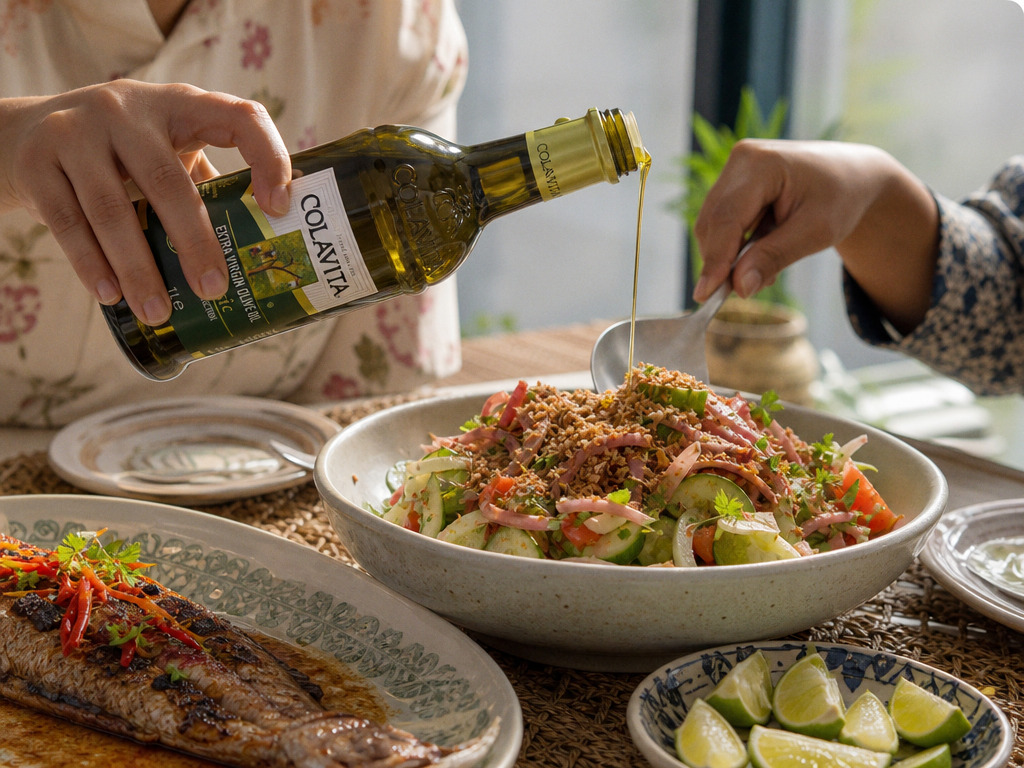
Refined coconut oil handles high heat with a neutral taste, so it suits goreng and hot stir-fries. Extra virgin olive oil is more heat-stable than its reputation suggests, but its flavour does not suit every Malaysian dish.

According to Healthline, refined coconut oil has a smoke point of about 204–232°C. Extra virgin olive oil’s smoke point is lower, which is why many people assume it cannot be used for frying.
That assumption does not hold up well. A 2018 study in Acta Scientific Nutritional Health (De Alzaa, Guillaume and Ravetti) heated 10 common oils to 240°C and held them at 180°C for six hours. Extra virgin olive oil produced the fewest harmful polar compounds, with coconut oil a close second. The researchers concluded that smoke point does not predict how well an oil performs under heat. The study credits extra virgin olive oil’s natural antioxidants and low polyunsaturated fat for that stability. Oils high in polyunsaturated fat broke down fastest. One caveat: the study was funded by a laboratory owned by an olive oil producer.
The practical takeaway is that both oils are stable enough for home frying, so if you are choosing an olive oil for cooking in Malaysia, extra virgin is a sound everyday pick. The bigger difference is taste. If you want olive oil’s heat tolerance without its flavour, Colavita Pure Olive Oil is a milder, refined blend that suits frying. Our tips on cooking with olive oil cover this in more detail.
Refined coconut oil tastes of almost nothing, so it lets your spices lead. Extra virgin olive oil has a fruity, peppery character that suits Western and Mediterranean dishes better than most Malaysian ones.
Here is how to split them in a typical week:
Coconut oil is the wrong default if you are watching saturated fat. Extra virgin olive oil is the wrong choice when its flavour would clash with the dish or when you want a cheaper oil for large-batch frying.
Coconut oil is also getting more expensive worldwide. According to the Malaysian Palm Oil Board (MPOB) Palm News, it became a premium global commodity in 2026 as Asian supply tightened. That makes it worth using where it genuinely performs best, rather than for everything.
Yes. Most Malaysian kitchens are best served by keeping extra virgin olive oil as the everyday oil and refined coconut oil for hot, neutral-tasting frying.
Rotating oils gives you the health profile of olive oil for most meals and the flavour control of coconut oil where it matters. If you want a third option for very high heat, our avocado oil vs olive oil vs rice bran oil guide and our avocado oil vs olive oil comparison cover the alternatives. For a closer look at virgin vs refined coconut oil, read our guide to coconut oil in Malaysia.
You can buy both online at sanglafoods.com, Shopee and Lazada, where Sangla Foods carries Colavita olive oils and Livvell coconut oil.
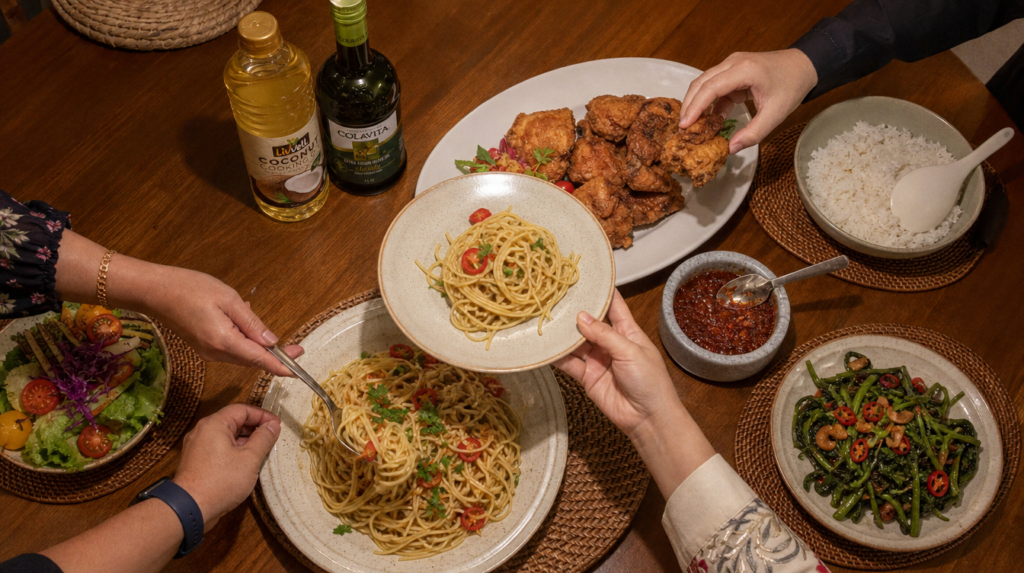
Colavita Extra Virgin Olive Oil is an Italian extra virgin olive oil with a mild balance of fruit and spice, suited to everything from light sautéing to drizzling. It is Halal certified by HQC, a body accredited by JAKIM. Browse the full Colavita range, including Pure Olive Oil and Avocado Oil.
Livvell Coconut Cooking Oil is a 100% refined coconut oil made from copra and refined without hexane or chemical solvents. Livvell states a smoke point of about 232°C. It is rich in MCTs, which may support metabolism as a quicker energy source than long-chain fats, and it is cholesterol-free with 0g trans fat per serving. It is made in Thailand, Halal certified and sold in a 1L bottle. See the rest of the Livvell range.
Find both at sanglafoods.com, Shopee and Lazada.
Refined coconut oil is better for hot frying when you want a neutral taste. Its smoke point is about 204–232°C. Extra virgin olive oil is also stable enough for home frying, according to a 2018 heating study, but its fruity flavour suits fewer Malaysian dishes.
Yes, olive oil is healthier for everyday use. Extra virgin olive oil is about 75% monounsaturated fat, while coconut oil is about 82% saturated fat. The American Heart Association recommends limiting saturated fat and replacing it with unsaturated fats such as olive oil.
Yes, you can swap refined coconut oil for olive oil in most cooked Malaysian dishes, such as goreng, sambal and curry bases. Refined coconut oil tastes neutral, so it will not change the flavour. Avoid swapping it into salad dressings, because coconut oil can firm up when cool.
Extra virgin olive oil is best for everyday sautéing, roasting and drizzling, so look for it first when you shop for olive oil in Malaysia. For frying or dishes where you do not want an olive taste, pure olive oil is the better pick because it is refined and milder.
Use refined coconut oil if you want a neutral cooking oil. Virgin coconut oil has a strong coconut flavour and a lower smoke point of about 177°C, so it suits desserts and coconut-forward dishes better than everyday cooking.