Halal Healthy Snacks in Malaysia
Halal Healthy Snacks in Malaysia You are standing in the snack aisle, reading the back of a pack, hunting for the halal logo before you



Walk into any Malaysian supermarket – AEON, Jaya Grocer, or your neighbourhood convenience store – and you’ll find an entire aisle dedicated to chips. They show up at office pantries, on mamak tables alongside teh tarik, and in festive hampers during Raya and Chinese New Year. But not all potato chips are made equal, and the Malaysian market has evolved well beyond the standard foil bag.
This guide covers the full story: how potato chips came to exist, how they arrived in Malaysia, and – most importantly – how to tell a genuinely good chip from a processed one. Whether you’re snacking solo or sourcing for a café or office, here’s everything you need to know.
Potato chips were invented by accident in 1853, though the earliest written recipe dates back to 1817 in England.
English physician William Kitchiner included a recipe for “potatoes fried in slices or shavings” in his 1817 cookbook The Cook’s Oracle – the first known written record of what we now call crisps. The snack’s more famous origin story, however, centres on chef George Crum at Moon’s Lake House in Saratoga Springs, New York. In 1853, after a diner repeatedly complained that his fried potatoes were too thick, Crum sliced them paper-thin and fried them until crisp. The resulting “Saratoga Chip” became a restaurant sensation.
For four decades, potato chips remained a restaurant-only item. That changed in 1895 when Ohio entrepreneur William Tappendam turned his home kitchen into a small production operation, selling chips from barrels at local markets – the first commercial potato chip venture on record. By 1926, American businesswoman Laura Scudder had introduced wax-paper bags with a printed freshness date, solving the staleness problem and unlocking mass-market distribution. The modern potato chip industry was born.
Source: Smithsonian Magazine
Potato chips became a household staple in Malaysia around the 1970s, carried in on the wave of Western packaged food entering Southeast Asian markets during that decade.
From the 1980s onward, demand grew steadily. Classic flavours – barbecue, sour cream, tomato – gave way to locally inspired options like seaweed, salted egg, and sambal. Today, Malaysia is one of Southeast Asia’s most active snack markets, with consumers increasingly splitting between mainstream mass-market chips and a growing premium and health-conscious segment. It’s this second tier – better ingredients, cleaner labels, more interesting flavours – that has seen the sharpest growth in recent years.
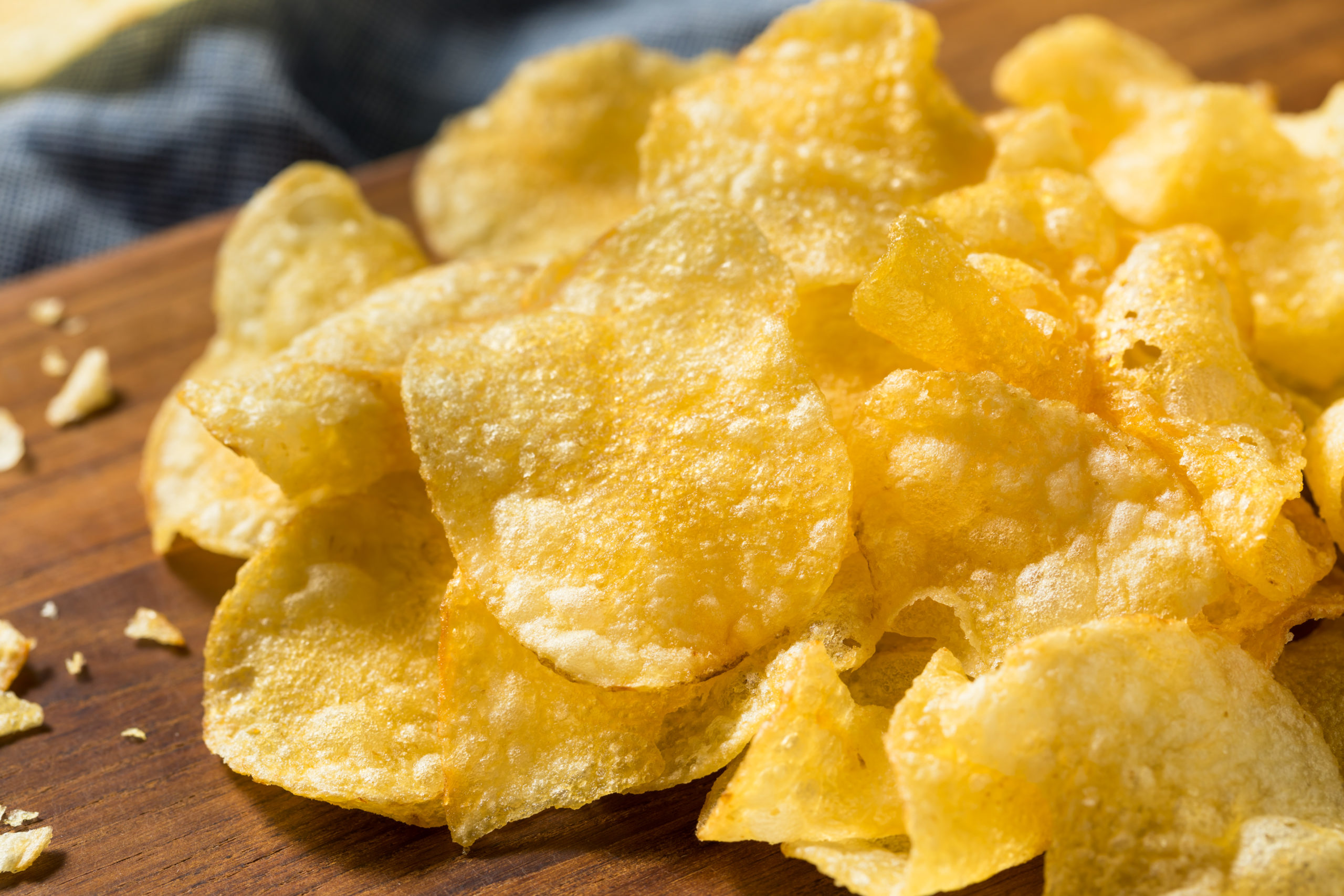
The Malaysian chip market today spans four distinct categories, each with a different production method, ingredient profile, and snacking occasion.
Baked chips skip the deep fryer entirely. Instead of being submerged in oil, the potato slices are oven-baked – a process that typically results in a lighter, less greasy chip while retaining more of the potato’s natural character.
Lorenz Naturals, imported from Germany, is one of the clearest examples of this done well. The potatoes are baked with their skins on in sunflower oil, and the range contains no artificial preservatives, flavourings, or colourings. Lorenz has been working directly with its potato growers for over 40 years, sourcing specific varieties suited to baking and conducting regular soil and crop checks to maintain consistency. The Naturals range is available in several flavours – Classic Salted, Mild Paprika, Sea Salt & Pepper, and Rosemary, among others – all produced at Lorenz’s facility in Germany and certified to DIN ISO 9001 quality standards.
If you want a chip that tastes unmistakably of potato rather than of oil and seasoning, Lorenz Naturals is worth keeping on your regular rotation. Find the range at sanglafoods.com/brands/lorenz/.
Hand-cooked, or kettle-cooked, chips are made in batches rather than on a continuous conveyor line. The potatoes are dropped into hot oil in controlled quantities, which creates uneven, irregular chips – thicker in places, with more varied texture and a noticeably more satisfying crunch than mass-produced variants.
Hunters Gourmet, founded in 1985 and now distributed across 46 countries, produces its hand-cooked range using 100% sunflower oil and non-GMO potatoes. The chips are Halal-certified, gluten-free, and made without artificial colours or preservatives. What makes Hunters Gourmet stand out in Malaysia is the flavour range – Black Truffle, White Truffle & Cheese, Pesto Parmesan, Wasabi & Turmeric, and Cherry Tomato & Olive, among others. These are gourmet profiles that pair well with drinks or charcuterie boards, and the packaging holds up well as a premium gifting option.
Hunters Gourmet is available at sanglafoods.com and selected retailers. Browse the range at sanglafoods.com/shop/.
Mushroom chips are not potato chips at all – but they belong in any honest buyer’s guide for the Malaysian snack aisle because they serve the same snacking purpose with a different nutritional profile.
Made from thinly sliced mushrooms that are dried or baked until crisp, mushroom chips are naturally lower in starch than potato-based snacks and deliver a deep umami flavour with minimal processing. Livvell Mushroom Chips, distributed by Sangla Foods, are made using natural ingredients and are designed for health-conscious consumers who want a satisfying crunch without the guilt. Mushrooms are naturally rich in B vitamins and selenium, and mushroom chips – when made without heavy seasoning or frying – tend to have a simpler, cleaner ingredient list than most conventional chips.
If you’re curious about mushroom chips as an alternative snack, the Livvell range is a good starting point. Explore it at sanglafoods.com/healthy-snacks-malaysia/.
Source: Harvard T.H. Chan School of Public Health – The Nutrition Source
Tempeh chips are the most nutritionally distinct option in this guide. Tempeh is fermented soybean – the same fermentation process that makes it a staple protein source across Indonesia and Malaysia – pressed into a firm cake, sliced thin, and cooked until crisp.
Woh Tempeh Chips are kettle-cooked from carefully selected soybeans at a modern facility in Jakarta, Indonesia. They are gluten-free, vegan, and non-GMO, and they contain no preservatives. Each chip delivers plant protein and dietary fibre alongside minerals including calcium, potassium, and phosphorus – nutrients that are largely absent from conventional potato chips. The flavour range includes Original, Sweet Chili, Wasabi, and Black Truffle, making them versatile enough for everyday snacking or as a talking point at a dinner spread. The fermentation process also gives Woh Tempeh its characteristic mild, nutty, umami depth – something no amount of seasoning can replicate in a standard potato chip.
It’s worth noting that tempeh chips do have a different texture to potato chips – they are denser and chewier, which some people love and others take time to get used to. They’re not a like-for-like swap, but they are a genuinely satisfying alternative.
Explore Woh Tempeh at sanglafoods.com/brands/woh-tempeh/.
Source: Healthline – Tempeh: Nutrition, Benefits, and How to Use It
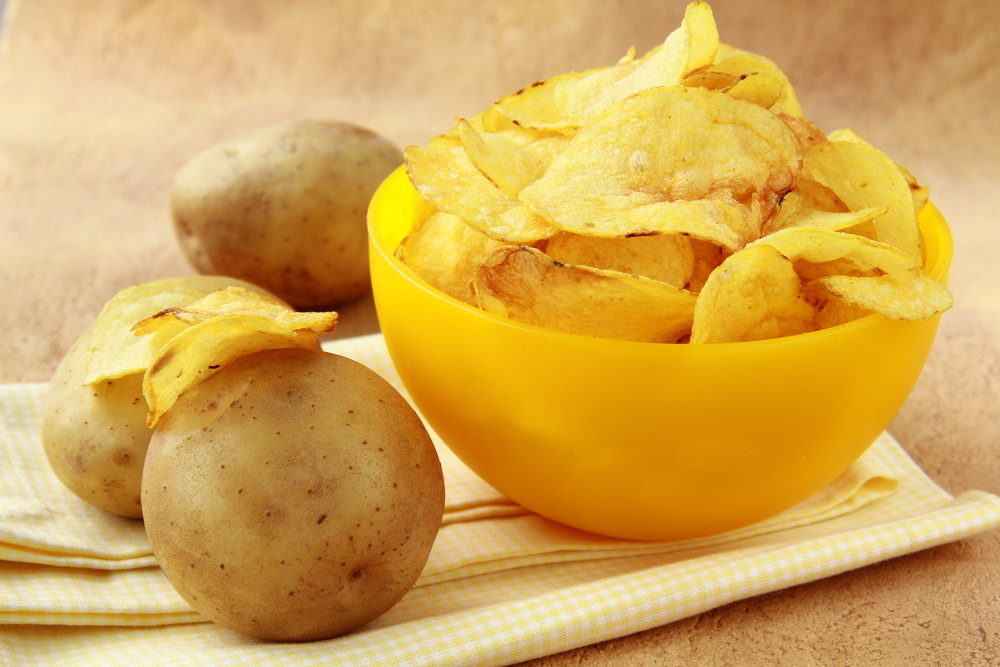
A clean chip label has four things worth checking: the oil type, the preservative list, the flavouring source, and the sodium level.
Oil type matters because the oil used for frying or baking is the single largest contributor to a chip’s fat composition. Sunflower oil – used by both Lorenz and Hunters Gourmet – is high in Vitamin E and contains primarily unsaturated fats. Palm oil is the most common alternative in mass-market chips and is significantly higher in saturated fat. If a label says “vegetable oil” without specifying the source, that’s usually palm.
Preservatives and artificial additives are the easiest way to separate premium from processed. Labels worth trusting say “no artificial preservatives” or list only natural antioxidants like tocopherol (Vitamin E). Artificial additives like tertiary butylhydroquinone (TBHQ) appear in many mainstream chips and are worth avoiding where possible. Source: UK Food Standards Agency – Food Additives
Flavouring source is the difference between “natural flavouring” and “artificial flavouring.” Both are legal – but natural flavourings are derived from real food sources, while artificial ones are synthesised. Chips that list only “natural flavouring” or name their spices directly (paprika, rosemary, sea salt) are the better option.
Sodium is the one area where even premium chips deserve scrutiny. A 30g serving of flavoured chips can contain between 150mg and 300mg of sodium – significant if you’re eating more than one serving. Plain or lightly salted varieties are always the lower-sodium choice.
Sangla Foods distributes Lorenz Naturals, Hunters Gourmet, Livvell Mushroom Chips, and Woh Tempeh across Malaysia. You can browse the full range online at sanglafoods.com/shop/, or find selected products at AEON and Jaya Grocer. The range is also available on Shopee and Lazada.
For a broader look at healthier snacking options in Malaysia, visit sanglafoods.com/healthy-snacks-malaysia/.
Malaysia’s chip market is dominated by mass-market brands, but premium imported options have grown significantly in recent years. Baked chips like Lorenz Naturals and hand-cooked kettle chips like Hunters Gourmet are among the well-regarded options available through specialty grocery retailers and online at sanglafoods.com.
Baked potato chips generally contain less fat than their fried counterparts because they use significantly less oil during production. However, the oil type, sodium content, and artificial additives matter as much as the cooking method – a baked chip with a long list of artificial flavourings is not automatically a better choice than a simply fried chip with clean ingredients.
Kettle-cooked chips are made in batches, where potatoes are dropped into hot oil in smaller quantities. This creates a thicker, crunchier chip with more irregular texture compared to continuously conveyor-produced chips. The batch process also tends to produce a more complex, toasted potato flavour.
Tempeh chips offer a genuinely different nutritional profile – more plant protein, more fibre, and meaningful mineral content – compared to standard potato chips. They do have a denser, chewier texture that differs from the lightness of a potato chip, so they are best approached as a complementary snack option rather than a direct replacement. Woh Tempeh Chips, available through Sangla Foods, are a well-made example of the category.
Mushroom chips are a growing category in Malaysia. Livvell Mushroom Chips are available through Sangla Foods at sanglafoods.com/shop/ and on Shopee and Lazada. They are made using natural ingredients and are suited to health-conscious snackers looking for a lower-starch alternative to potato chips.