Best Pasta Sauces in Malaysia for a Delicious 2026
A simple bowl of pasta, perfectly coated in a rich and flavourful sauce, is a universal comfort food. In Malaysia, this love for Italian cuisine



If you’ve ever stood in the biscuit aisle wondering whether that blue tin of Danish butter cookies is really worth it – or whether any butter biscuit will do – you’re not alone. Both look golden and smell delicious. But bite into a proper Danish butter cookie and you’ll immediately notice something different: the texture, the richness, the way it crumbles.
This guide breaks down exactly what separates Danish butter cookies from regular butter biscuits – from the ingredients and production method to texture, taste, and when each one actually makes sense to reach for. Whether you’re buying for daily snacking, gifting, or serving guests, understanding the difference helps you choose better.
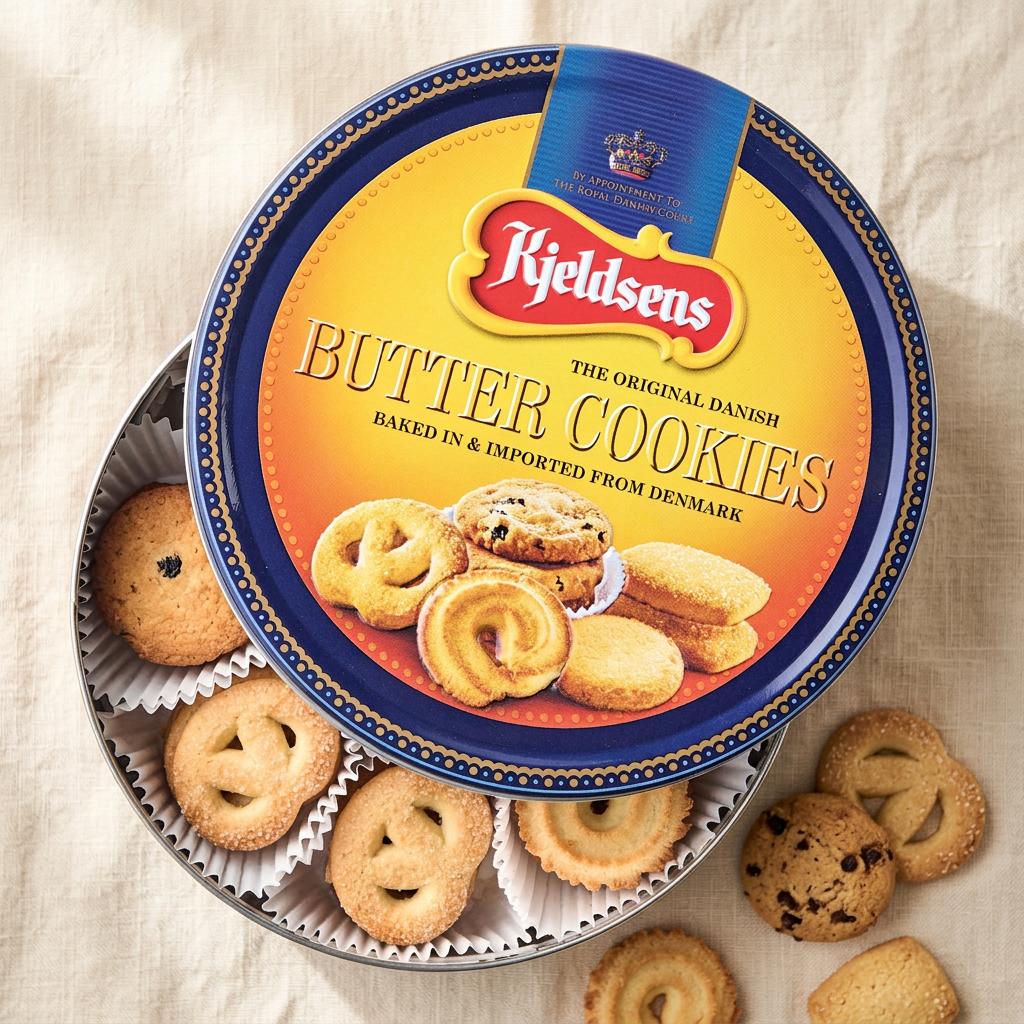
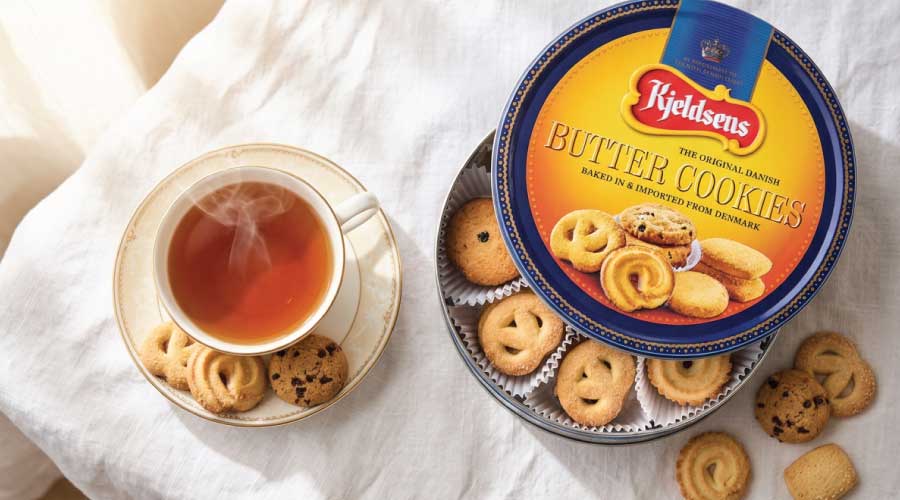
Danish butter cookies are a specific style of shortbread-type biscuit that originated in Denmark, distinguished by a very high butter content, a light and crumbly texture, and a delicate vanilla or almond flavour. The most recognisable version comes in a round blue tin, with an assortment of piped shapes – rings, pretzels, rosettes, and shells.
The category was shaped largely by Kjeldsen’s, the Danish bakery founded in 1933 that turned this style of cookie into a globally recognised format. According to food historians, Danish butter cookies became popular as export gifts from Scandinavia in the mid-20th century – the blue tin was both practical for shipping and visually distinctive enough to stand out as a gift.
What defines the Danish style is its ratio: a significantly higher proportion of butter relative to flour compared to standard biscuit recipes. This gives Danish butter cookies their characteristic melt-on-the-tongue quality and fine, sandy crumb — a texture that regular butter biscuits rarely replicate.
Regular butter biscuits use butter as a key ingredient, but typically at lower ratios and often alongside additional binders, leavening agents, or flavourings that change the final result. The texture is firmer and more uniform – what you’d describe as a classic biscuit snap rather than a shortbread crumble.
Brands like Arnott’s produce well-loved butter biscuits such as the Scotch Finger — an Australian shortbread style with a crumbly texture and genuine buttery richness, but with a firmer, more structured bite than its Danish counterparts. These are excellent everyday biscuits: great for dunking, versatile, and widely available.
The key differences come down to three things:
Butter content. Danish butter cookies use a higher butter-to-flour ratio, which creates a more delicate, melt-in-the-mouth texture. Regular butter biscuits are firmer and hold their shape better under pressure – literally and figuratively.
Texture. Danish butter cookies are light, airy and almost sandy in texture. Regular butter biscuits have more structure and a cleaner snap when broken.
Purpose. Danish butter cookies are designed as indulgent, occasion-worthy biscuits — the kind you serve with tea or give as a gift. Regular butter biscuits are built for everyday snacking and practicality.
The iconic blue tin isn’t just packaging – it’s a signal. When you see a round blue tin of butter cookies, you’re being told something about the product inside: that it’s Danish, it’s premium, and it’s meant to be shared or given.
The tin format serves a practical purpose too. Shortbread-style cookies with high butter content are more fragile than standard biscuits. The rigid tin protects them during transport and extends shelf life without the need for extra preservatives. It also makes them stack neatly in their distinctive piped shapes – something a flexible bag or tray couldn’t achieve cleanly.
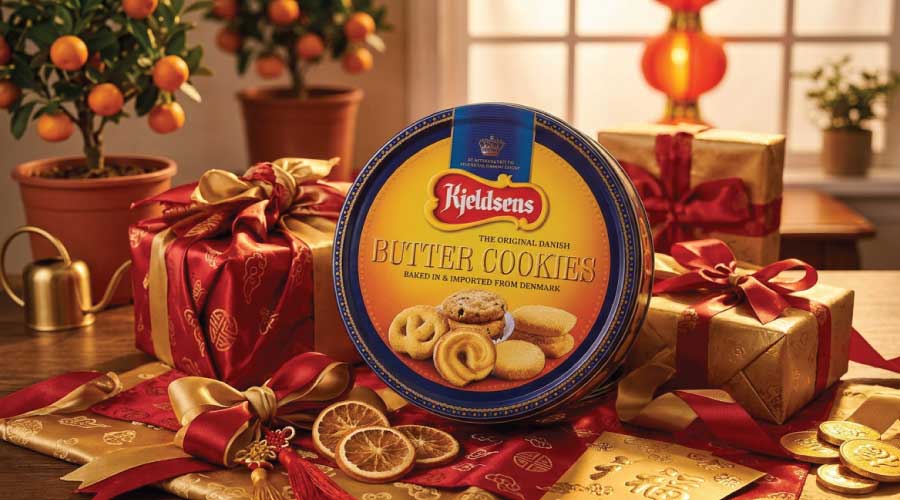
Kjeldsen’s has produced Danish butter cookies in this blue tin format since the 1930s. The tin has become so synonymous with Danish butter cookies globally that it’s now almost a category marker in itself – particularly in Malaysia, where imported biscuit tins are a popular choice for festive gifting during Chinese New Year, Hari Raya, and Deepavali.
Not every tin of “Danish butter cookies” contains the same thing. The market includes a range of products labelled as Danish-style, but quality varies significantly depending on the ingredients and production process.
Kjeldsen’s uses real butter – not margarine or a butter-blend – as the primary fat in their recipe. This matters because butter contributes flavour compounds, a specific melt point, and a richness that vegetable fat substitutes don’t replicate. According to the Kjeldsen’s brand heritage, the original recipe has remained largely unchanged since 1933, with the same proportions of butter, flour, sugar and vanilla.
Generic Danish-style cookies – particularly at lower price points – often substitute a portion of butter with palm oil or vegetable shortening. This lowers the cost but changes the texture and flavour profile. The result is a firmer, less delicate biscuit that lacks the characteristic melt of a proper high-butter recipe.
If you’re comparing tins on a shelf, checking the ingredients list is the most reliable way to tell the difference. Real butter should be listed as the primary fat – not “vegetable fat” or “margarine.”
Both have a place – the choice depends on what you’re doing with them.
Choose Danish butter cookies when:
Choose regular butter biscuits when:
Neither is objectively superior – they serve different moments. A Kjeldsen’s tin on a festive table sends a different signal than an Arnott’s pack in the snack cupboard. Both signals can be exactly right depending on the context.

Yes – and this is arguably where Danish butter cookies earn their strongest reputation in Malaysia. Imported biscuit tins have long been a staple festive gift, particularly for Chinese New Year, when presenting a visually distinctive tin carries cultural weight. The blue Kjeldsen’s tin is immediately recognisable as a premium import, which matters in a gifting context where presentation is part of the gesture.
The resealable tin also makes it a practical gift: recipients can eat the cookies over several days and keep the tin afterwards — something many Malaysian households do, repurposing them for storage. According to food gifting research, biscuit tins rank among the most versatile gift food formats because they’re enjoyed by all ages, require no refrigeration, and have long shelf lives.
For corporate gifting, Danish butter cookies carry a neutral, broadly appealing profile — they’re not spicy, not polarising, and familiar enough to be universally welcomed. The Kjeldsen’s format in particular reads as thoughtful rather than generic.
Kjeldsen’s Danish Butter Cookies are available in Malaysia through sanglafoods.com, as well as Shopee and Lazada. You can also find them at AEON and selected specialty grocery stores near you.
If you’re exploring the full range of imported biscuits and cookies available in Malaysia, browse the Sangla Foods shop – including Arnott’s for Australian-style butter biscuits, and Pepperidge Farm for American-style premium cookies.
Danish butter cookies use a significantly higher butter-to-flour ratio than regular butter biscuits, which gives them a lighter, sandier, melt-in-the-mouth texture. Regular butter biscuits are firmer, have a cleaner snap, and are generally better suited to everyday snacking or dunking. Danish butter cookies are more commonly used for gifting and special occasions.
The blue tin format was originally designed to protect fragile high-butter cookies during transport – the rigid tin prevents breakage and extends shelf life without preservatives. Over time, the blue tin became an iconic symbol of Danish butter cookie heritage, most closely associated with Kjeldsen’s, which has used this format since 1933.
Yes. Danish butter cookies – including Kjeldsen’s – are available in Malaysia through sanglafoods.com, Shopee, Lazada, and selected retailers including AEON and Jaya Grocer.
Check the ingredients list for real butter as the primary fat — not vegetable fat or margarine. Genuine Danish butter cookies should list butter near the top of the ingredients, alongside flour, sugar and vanilla or almond flavouring. The texture should feel light and sandy, not dense or chewy.
Yes. The blue tin format is widely recognised as a premium gifting choice in Malaysia, particularly for Chinese New Year, Hari Raya, and Deepavali. Kjeldsen’s Danish Butter Cookies are a popular festive hamper component due to their broad appeal, long shelf life, and distinctive presentation.